City of Seasons
Set design for City of Seasons, Companhia Independente, Lisbon 2025: no budget for scenery, so thirty identical umbrellas became flower, canopy, falling leaf and bare skeleton.

Client
Location
Category
Year

01. The Project
Companhia Independente came to us with a play in four acts, one for each season, and no budget for a set. Four seasons usually mean four sets, with the build, storage and scene changes that come with them. We could afford none of that, so the question changed: what is the cheapest object that can still carry a whole show?
The answer was the umbrella. Around thirty of them, identical and off-white, stay on stage from the first scene to the last. They are never replaced and never recoloured. Only their position and state change, and all colour comes from light and projection.
02. The Play
One city, four seasons, the same garden and a different world in each. The acts move from discovery and hope in Spring, through intensity and desire in Summer, to letting go in Autumn and silence and acceptance in Winter, which also points to a new beginning.
03. One Rule, Four Acts
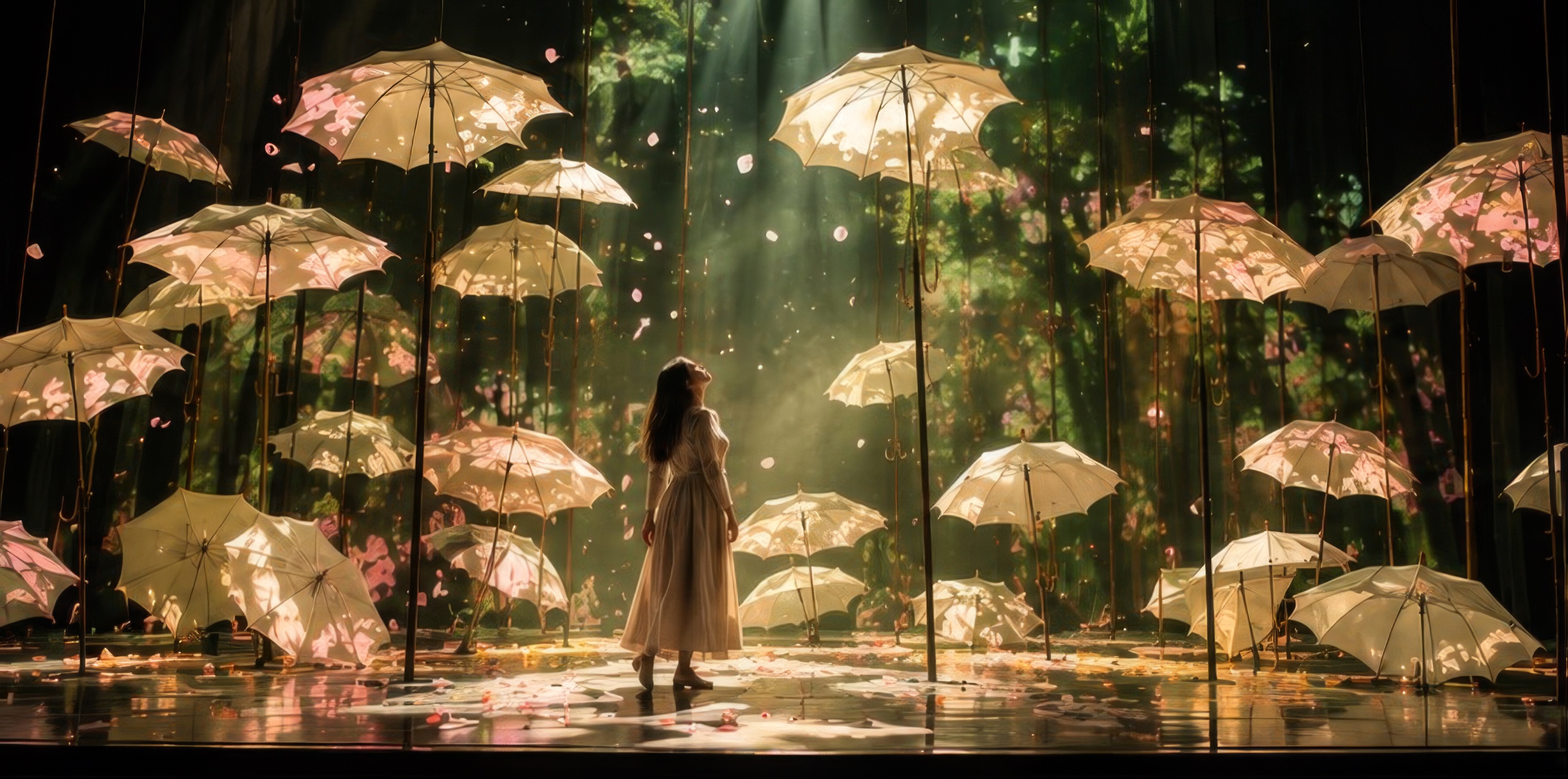
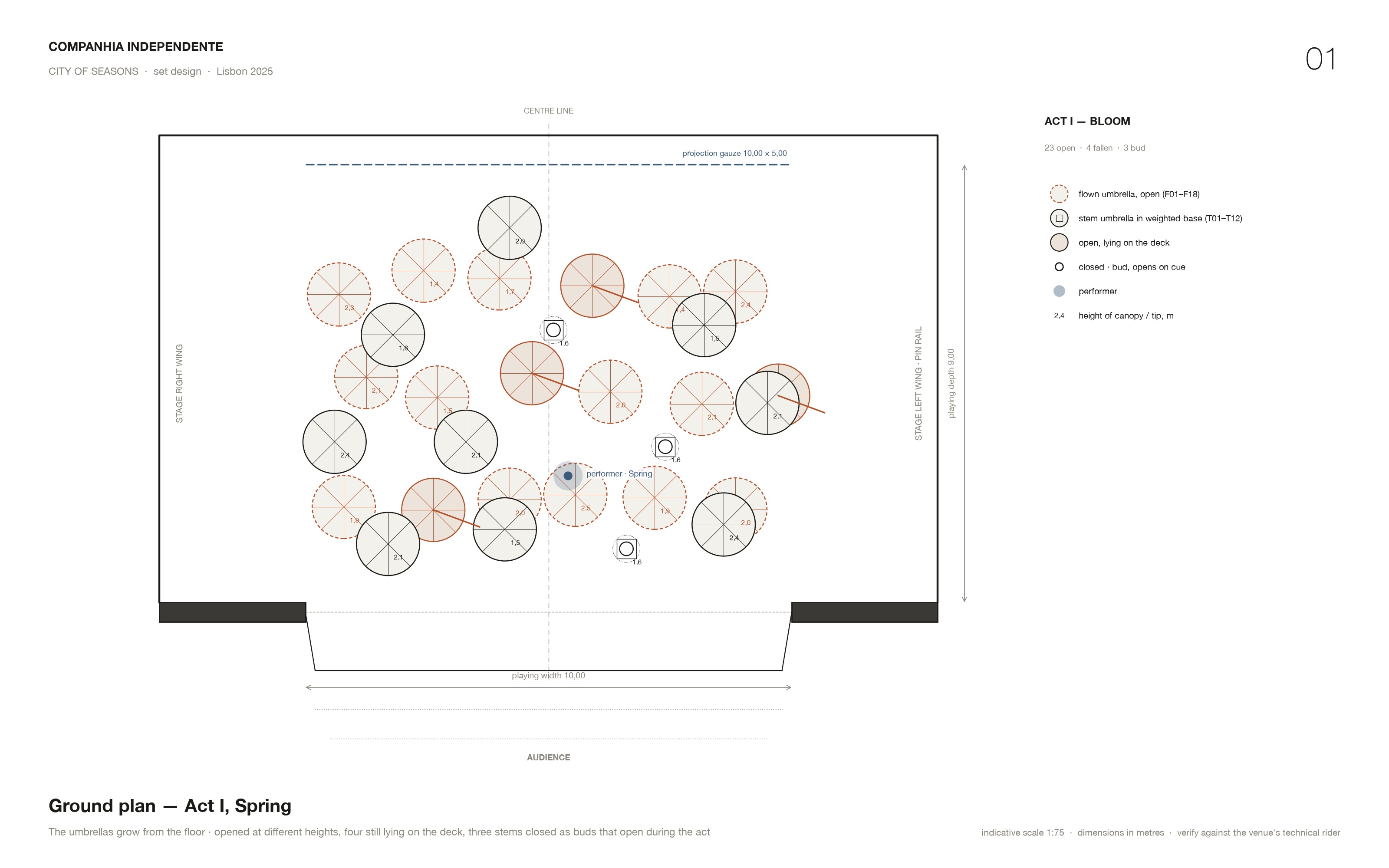
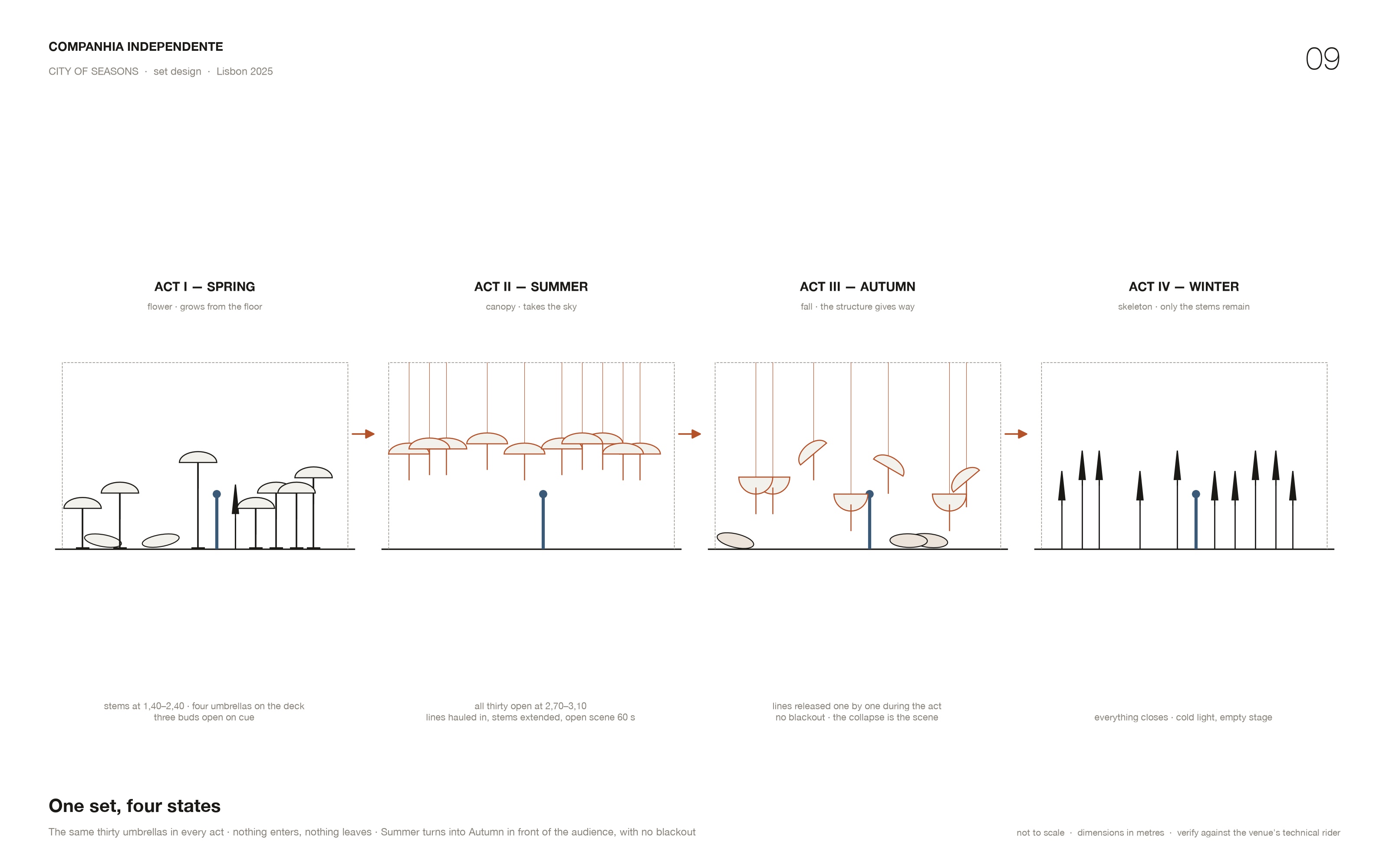
Spring — Bloom. The umbrellas grow up from the floor. Some rest on the ground, some lean, some open at different heights, and a few open during the scene, the way flowers open. Soft projections of blossom land on the canopies.
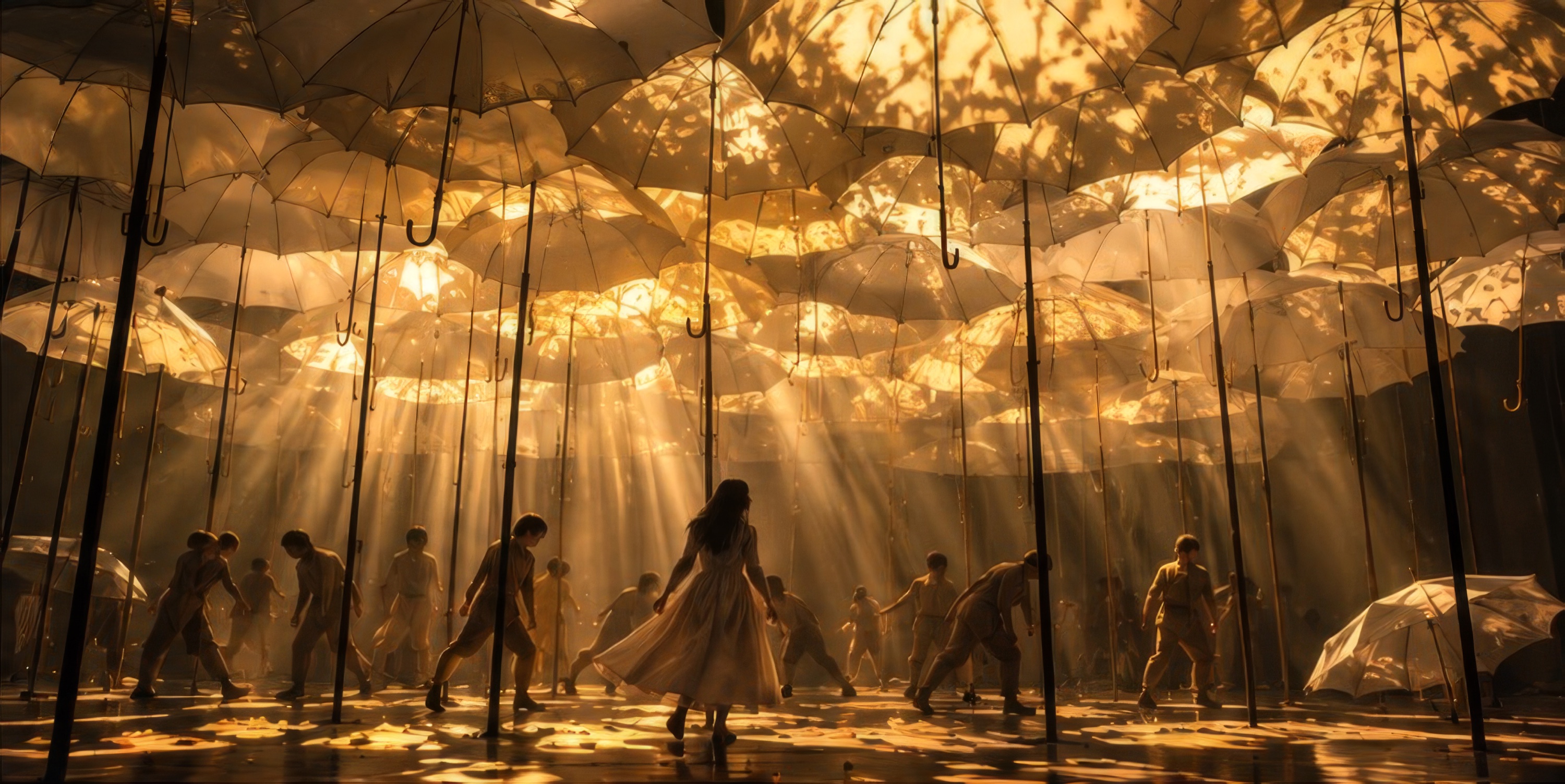
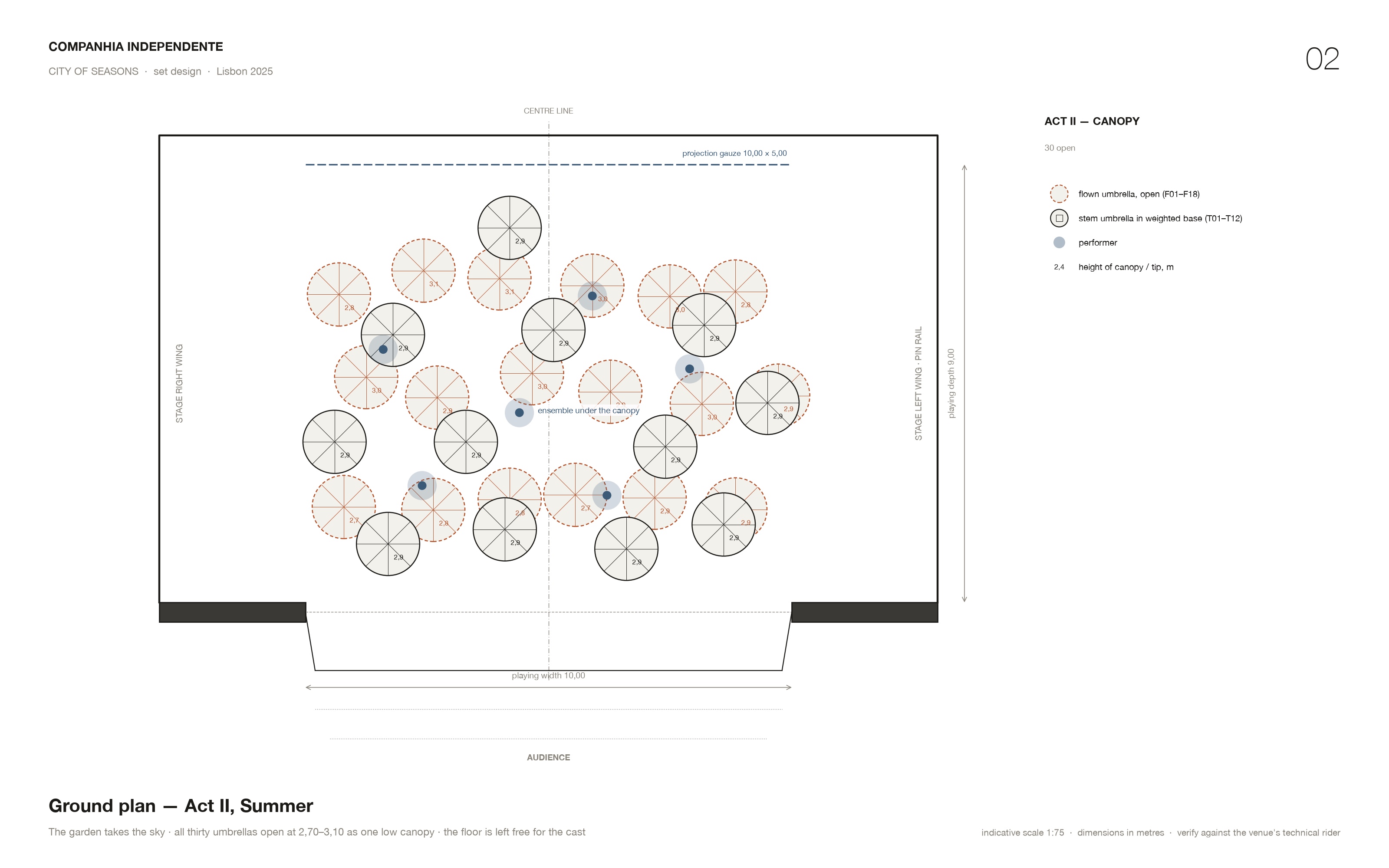
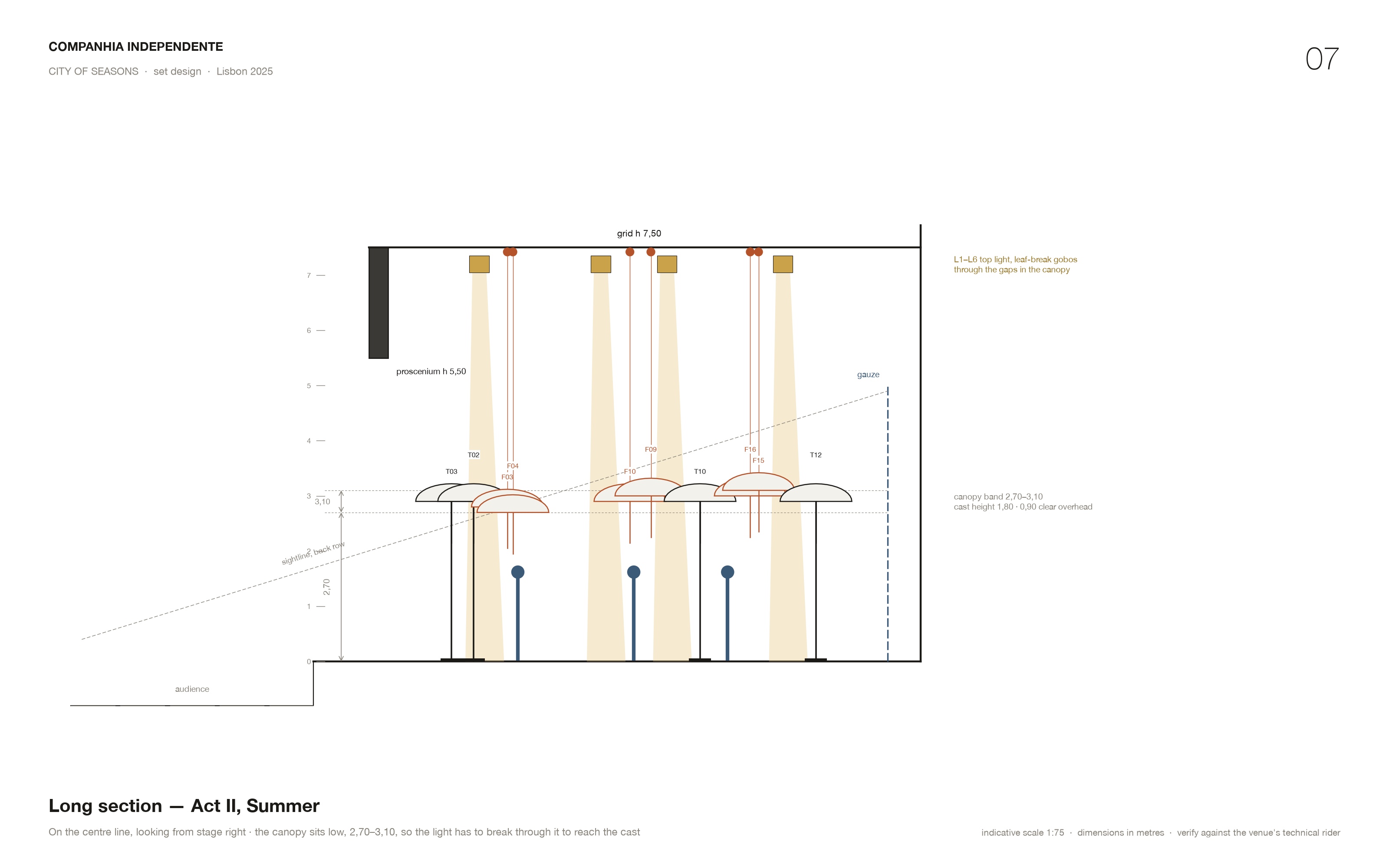
Summer — Canopy. The garden has grown and taken over the stage. The umbrellas rise to form a low, irregular ceiling over the performers, like a forest canopy. The floor stays open. Light cuts through the gaps in hard shafts, and the cast moves under the garden rather than through it.
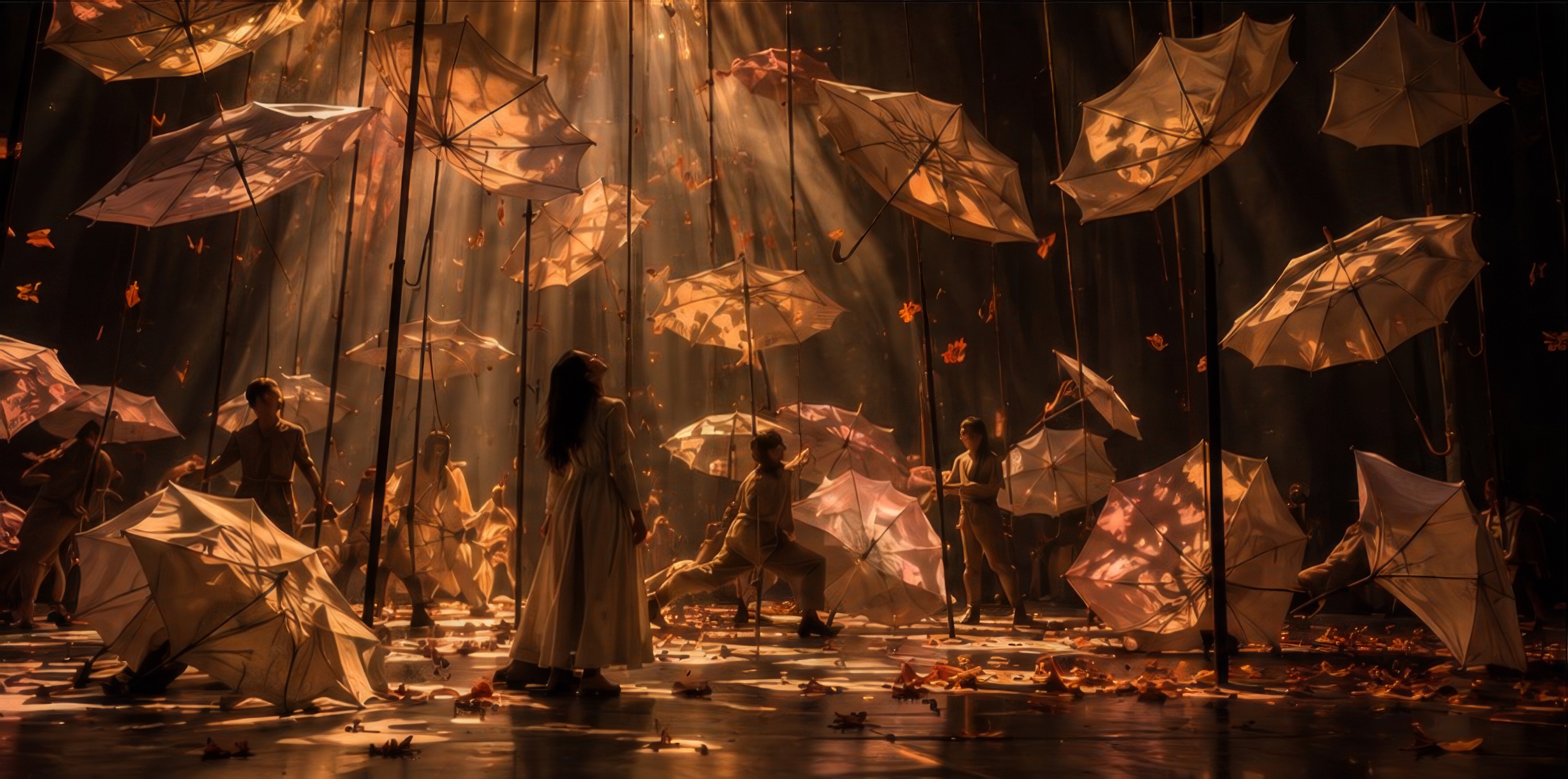
Autumn — Fall. The canopy starts to give way. Umbrellas turn inside out, hang crooked or very low, or end up on the floor, and performers drag them across the stage. It does not illustrate leaves. The whole structure is losing its footing, and by the end of the act almost nothing is still open.
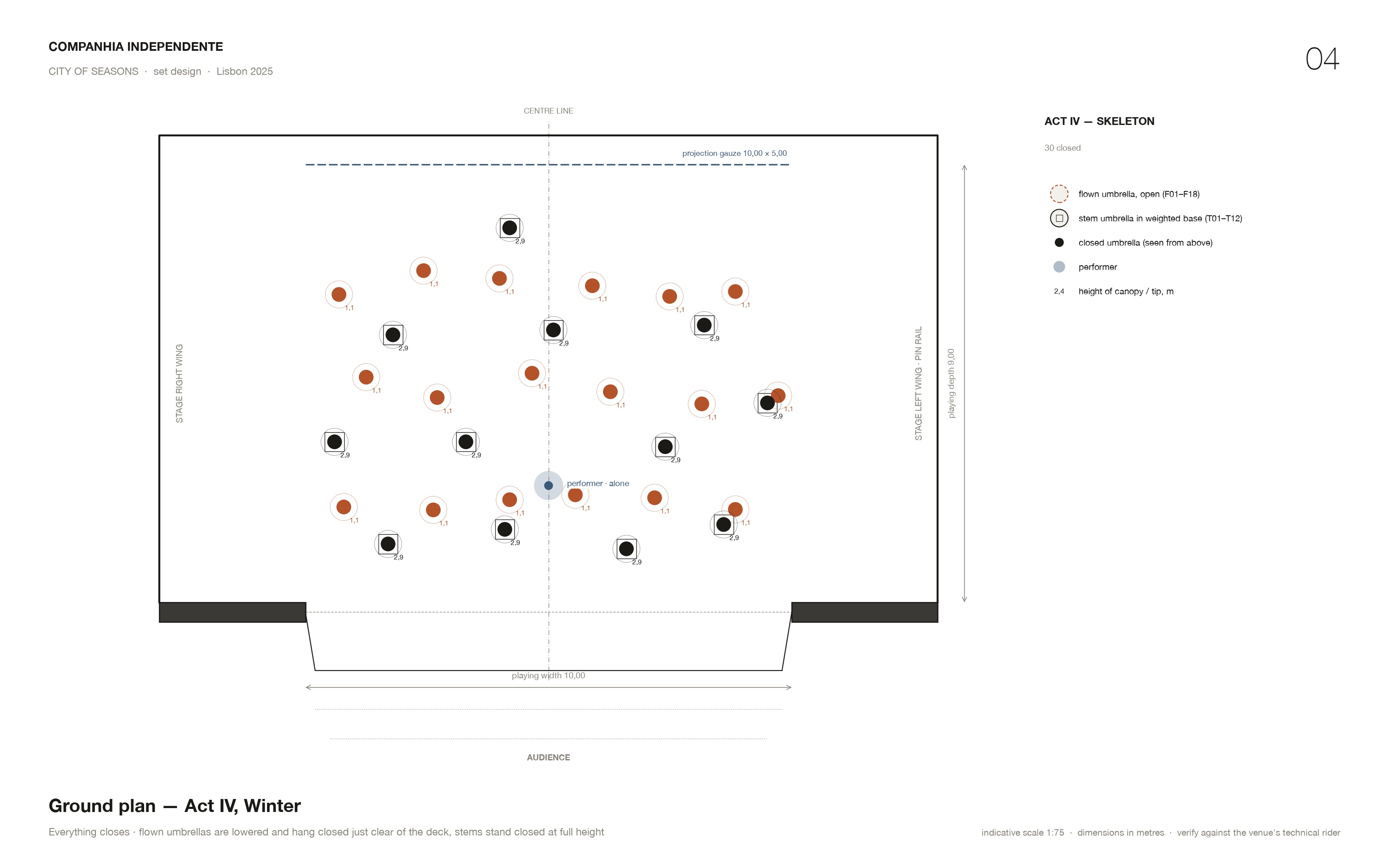
Winter — Skeleton. Everything closes. The umbrellas become bare vertical stems, and for the first time the audience sees how much empty space the stage holds. The light is cold and there is almost no projection.
04. No Budget, One Object
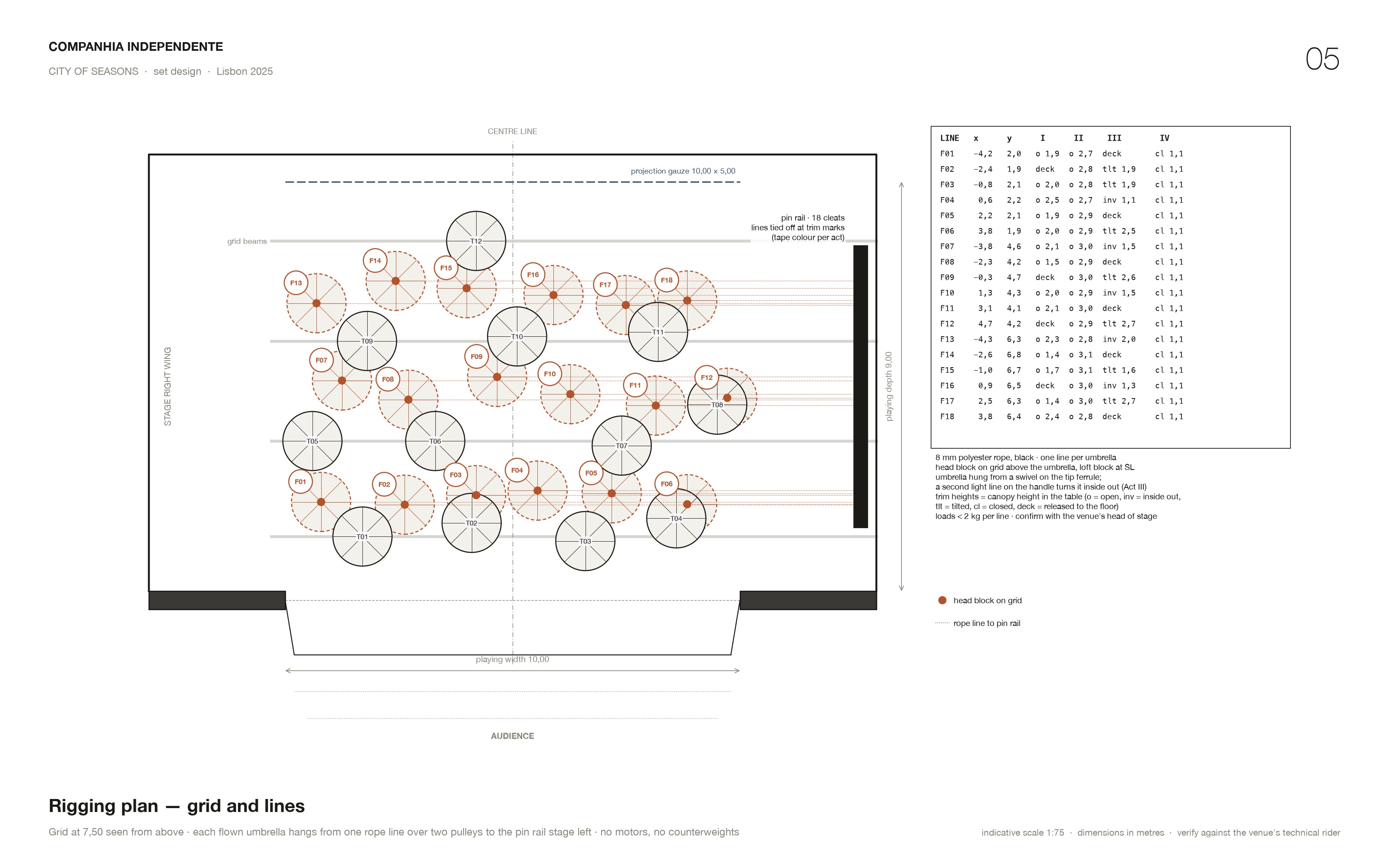
Nothing in the set is built in a workshop. The umbrellas are bought off the shelf, all the same model, with a few spares. Eighteen hang from single rope lines that run over the venue's grid to a pin rail in the wings, so they are raised, lowered, tilted and turned inside out by hand, with no motors and no counterweights. The other twelve stand on telescopic steel stems in weighted bases, and the cast opens and closes them on stage.
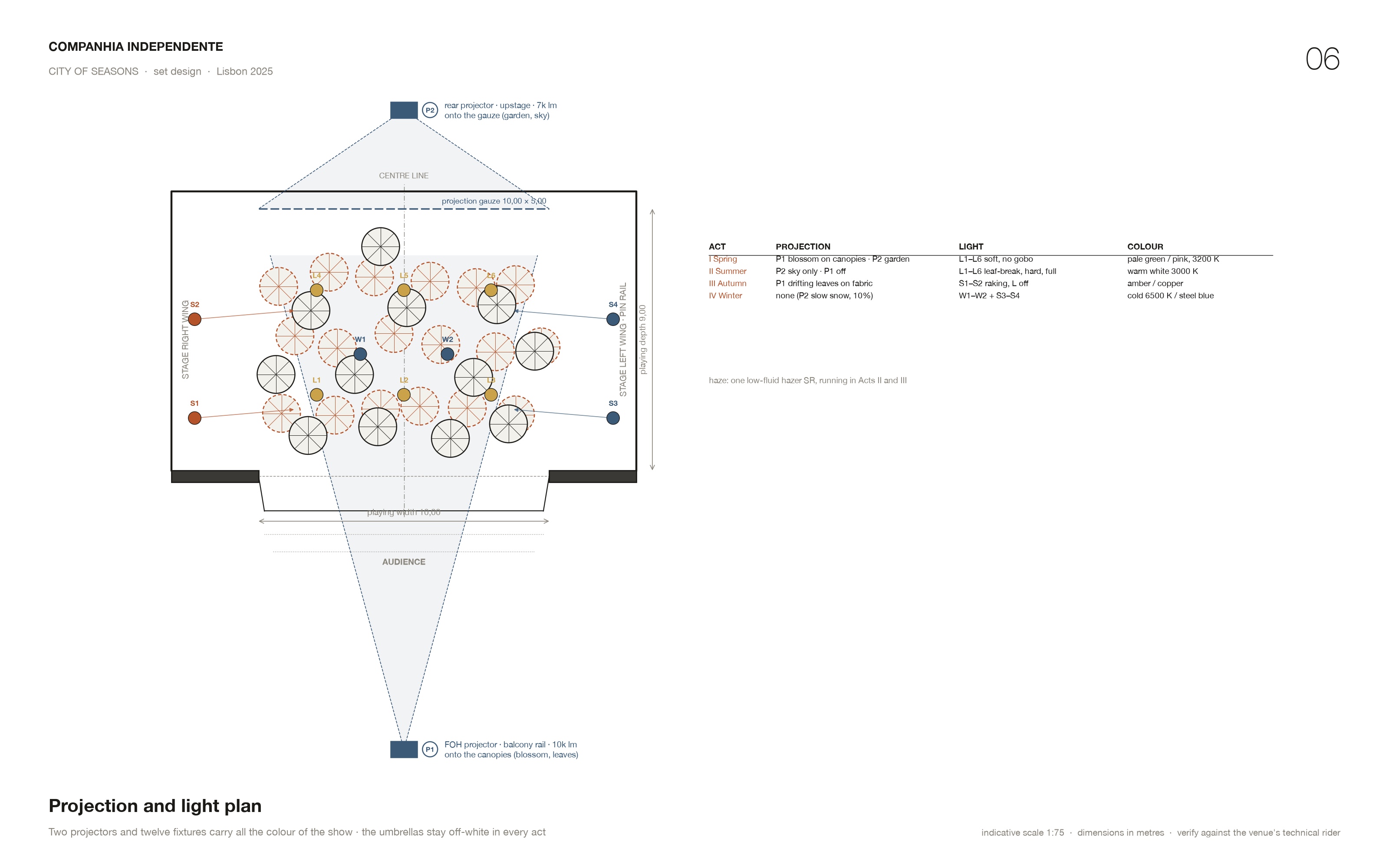
The restriction became the language of the show. There is no orange umbrella for Autumn and no blue one for Winter. Every umbrella is the same, and the seasons are made with two projectors, a dozen fixtures and haze. Because the object never leaves the stage, the changes need no blackout: Summer turns into Autumn in front of the audience, and the collapse of the canopy is the scene.
05. Process
The first study gave each season its own look. Spring and Winter already worked through a change of form. Summer and Autumn were the same scene in a different colour, and that weakened the idea. The revision replaced four decorations with one physical rule: the set grows from the ground, fills the sky, falls, and leaves its structure behind.
06. From Image to Stage
The images were drawn up as a working set: a ground plan for each act, a rigging plan with the trim height of every line in every act, a projection and light plan with the colour of each season, a long section through the Summer canopy, and a sheet for the umbrella itself, with its two mountings and five states.
07. Where, when, with whom
Set design by ALGAZAL//CO for Companhia Independente. Lisbon, Portugal, 2025.