Melissa Soft System
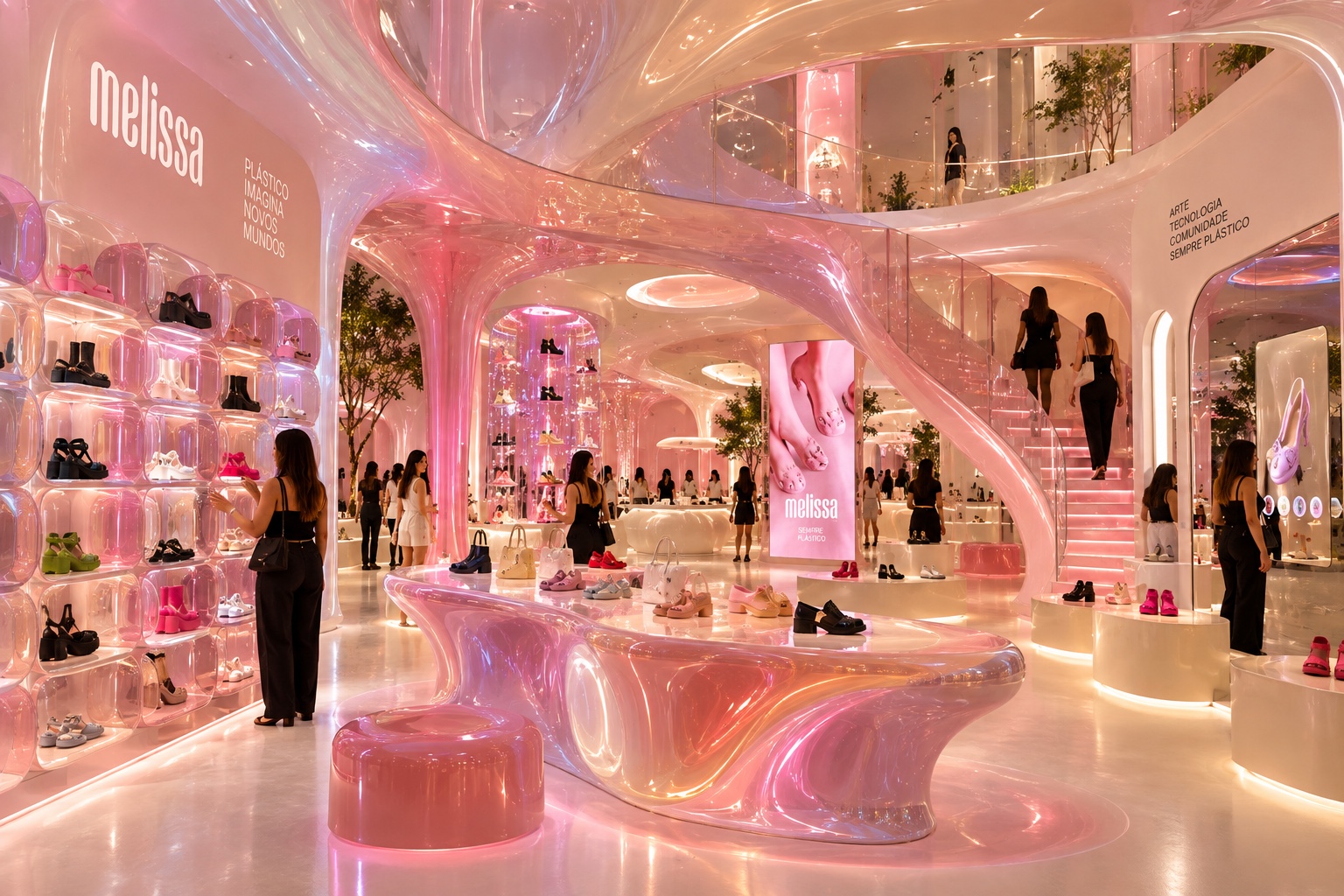
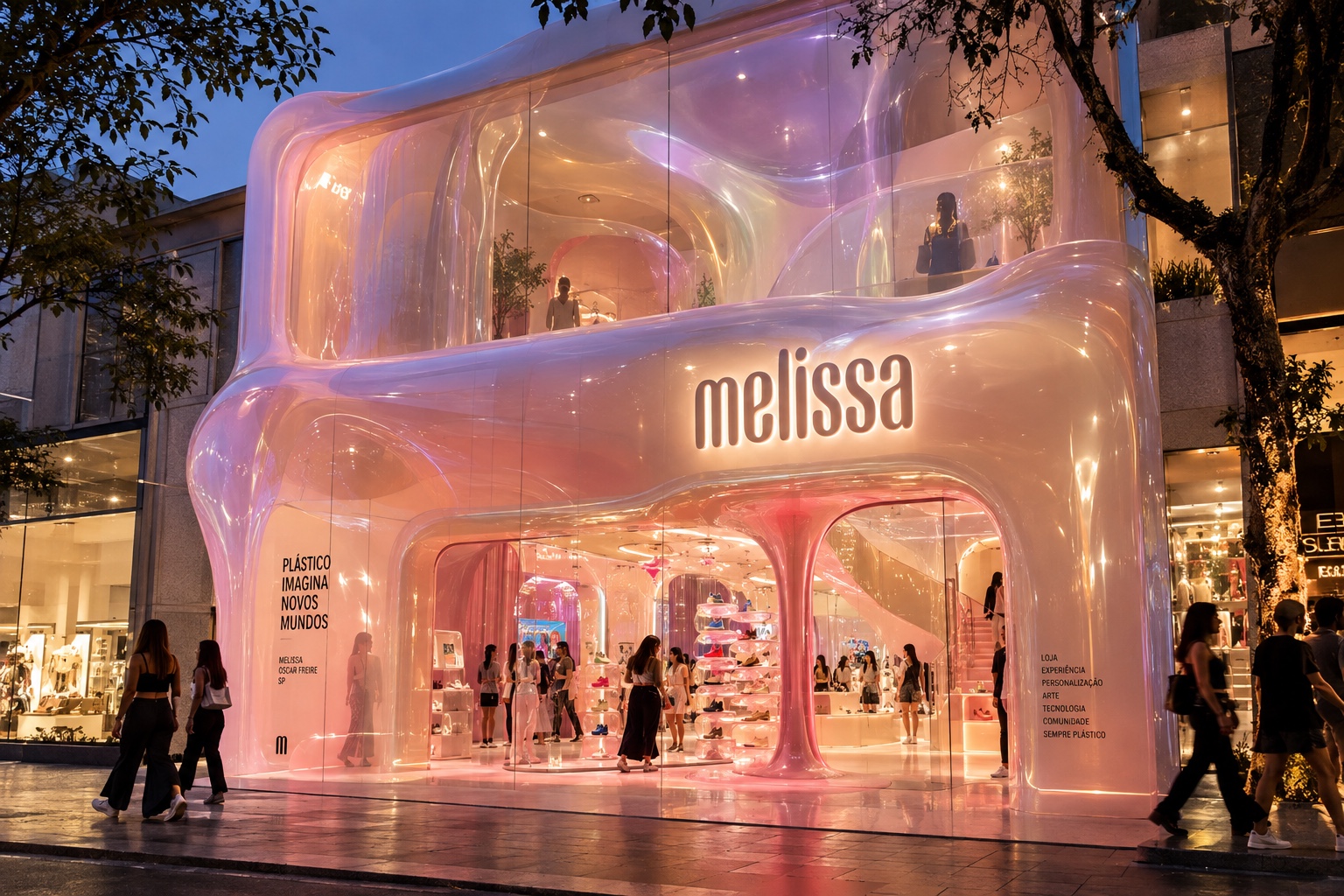
A study for the new Melissa flagship on Rua Oscar Freire, where the architecture looks like the product: soft, glossy, liquid pink plastic.
Client
Location
Category
Year

01. The Project
A study for the new Melissa flagship on Rua Oscar Freire, in São Paulo, currently in the pricing phase.
Melissa has always sold plastic as something desirable: soft, scented, shiny, a little artificial on purpose. Soft System asks what a store looks like if the architecture is made of the same idea. Not a white box with pink shoes on shelves, but a space that seems to have been poured, like the product itself.
From the street, the building reads as one glossy, pearl-pink shell over two floors, with its edges running down like something still setting. The ground floor opens through two soft arches held by a single column shaped like a drip. On the glass: plástico imagina novos mundos, plastic imagines new worlds.
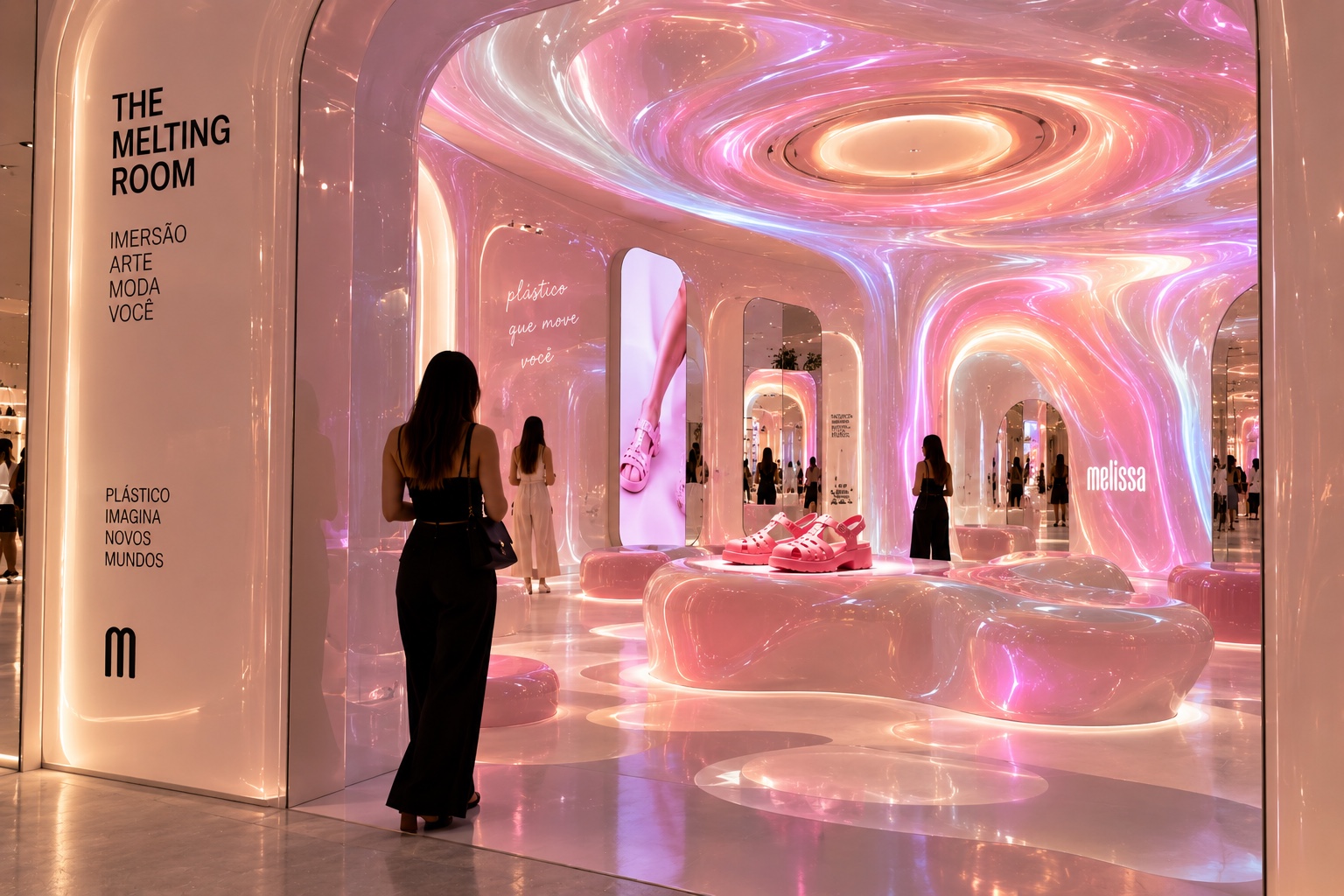
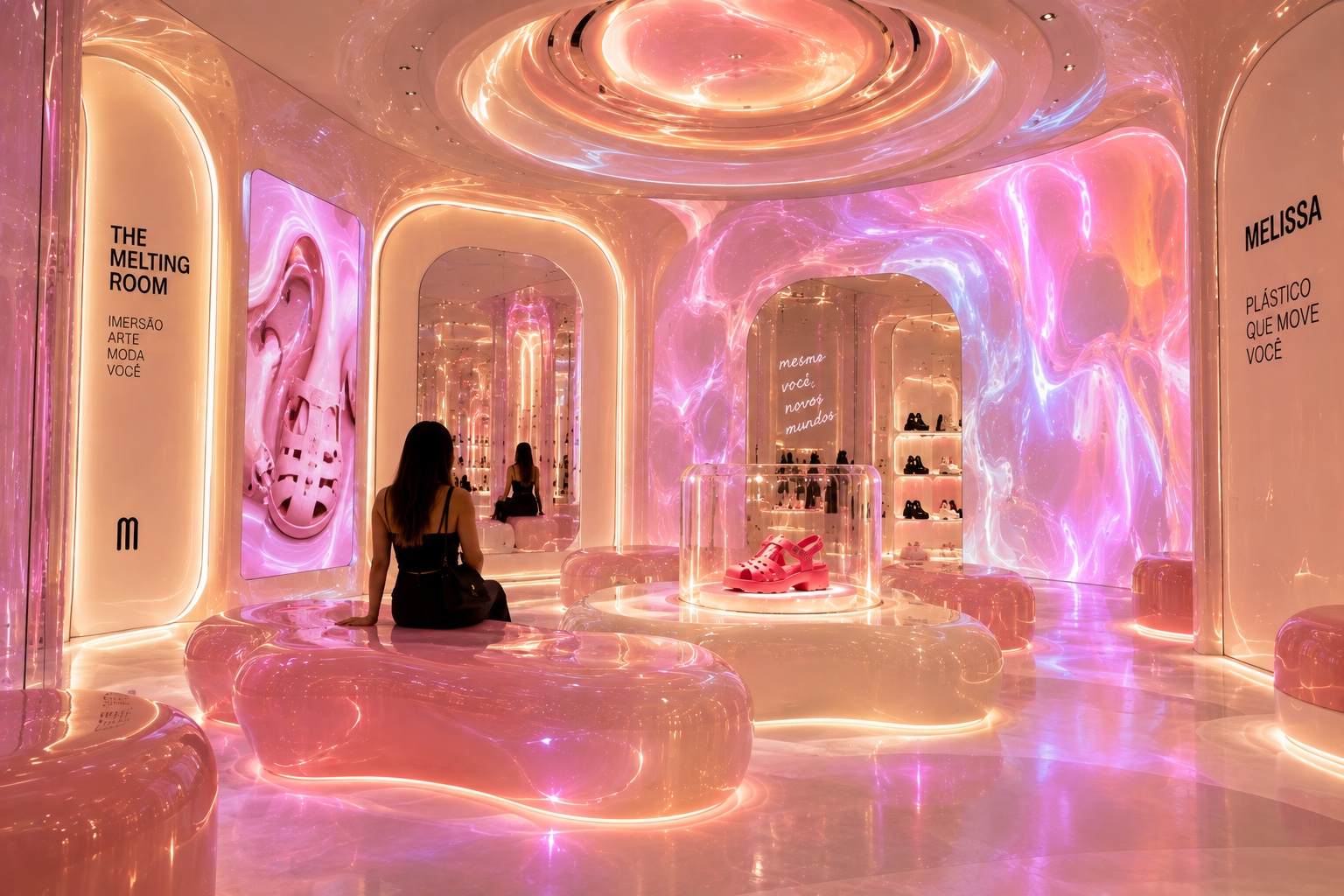
Inside, the store is a sequence of rooms with rounded edges, glossy floors and translucent furniture, lit from inside. The shoes sit in the middle of it, not against the wall.
02. Plastic That Moves You
The line on the walls is plástico que move você, plastic that moves you. It is also the brief. The store is less a place to pick a size and more a place to try, change and share. Every room is built around one of those actions.
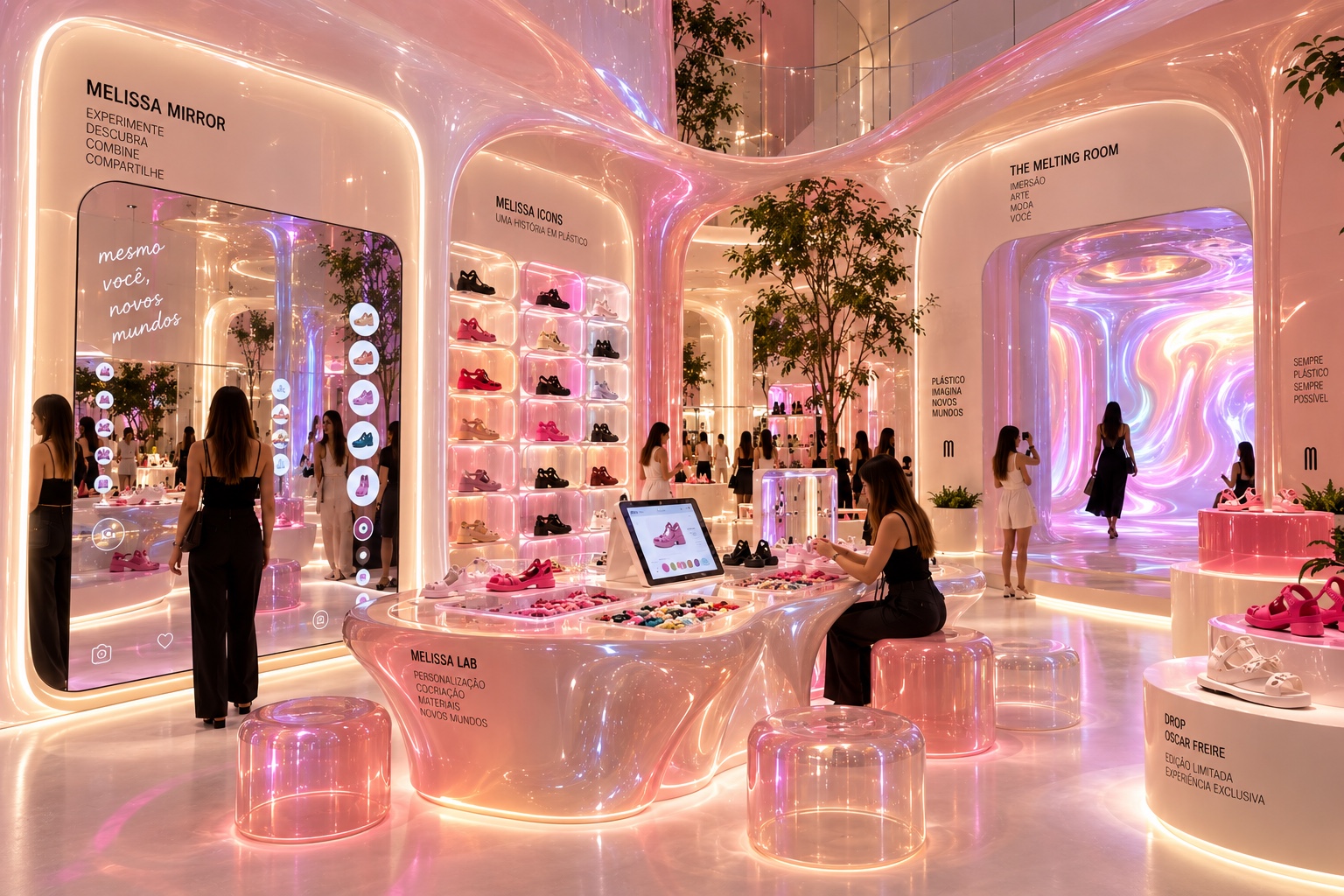
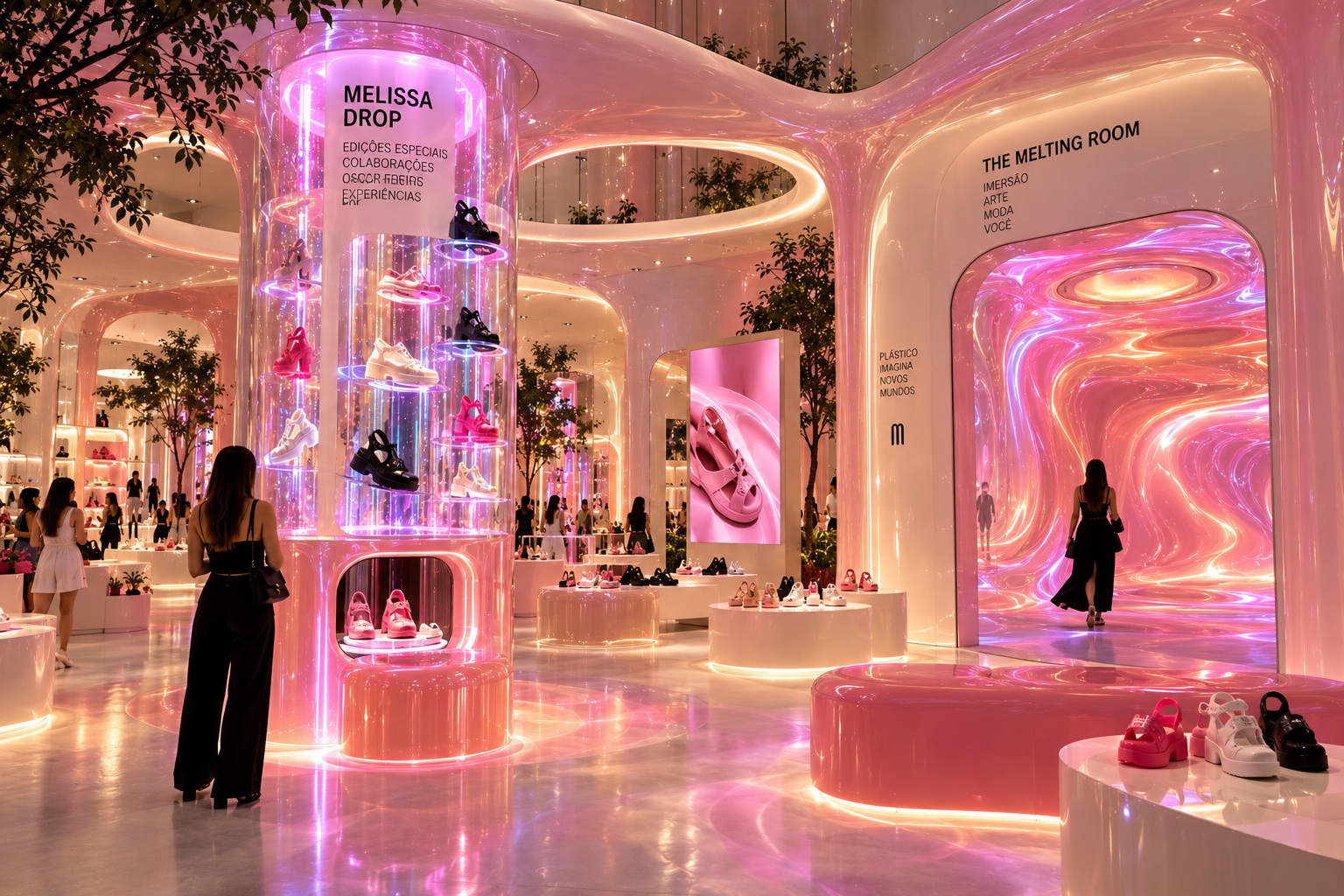
The Melting Room. An immersive room with soft benches and walls that move with projected liquid light. One pair of sandals, alone under a clear dome, as if it were the only object that stayed solid.
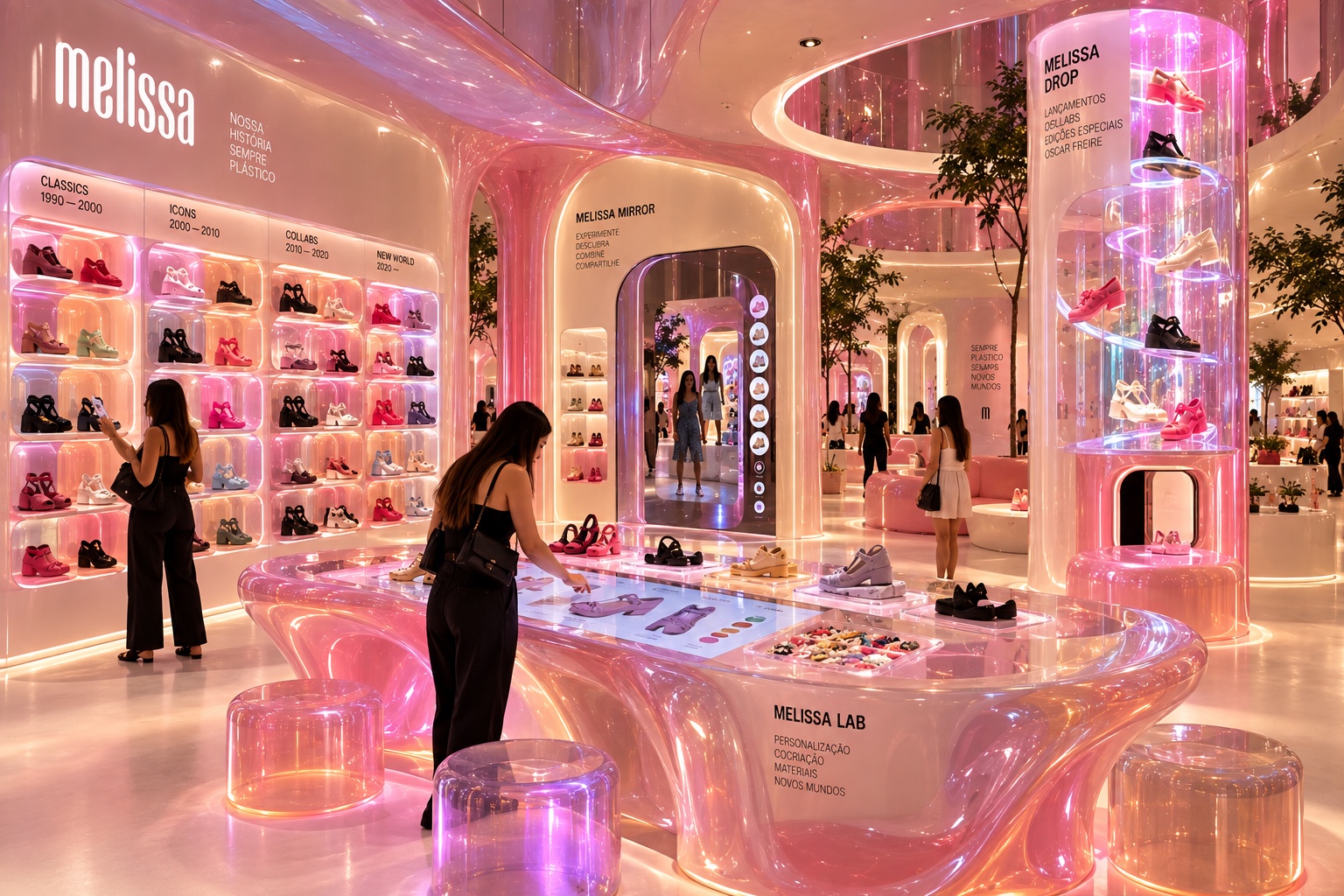
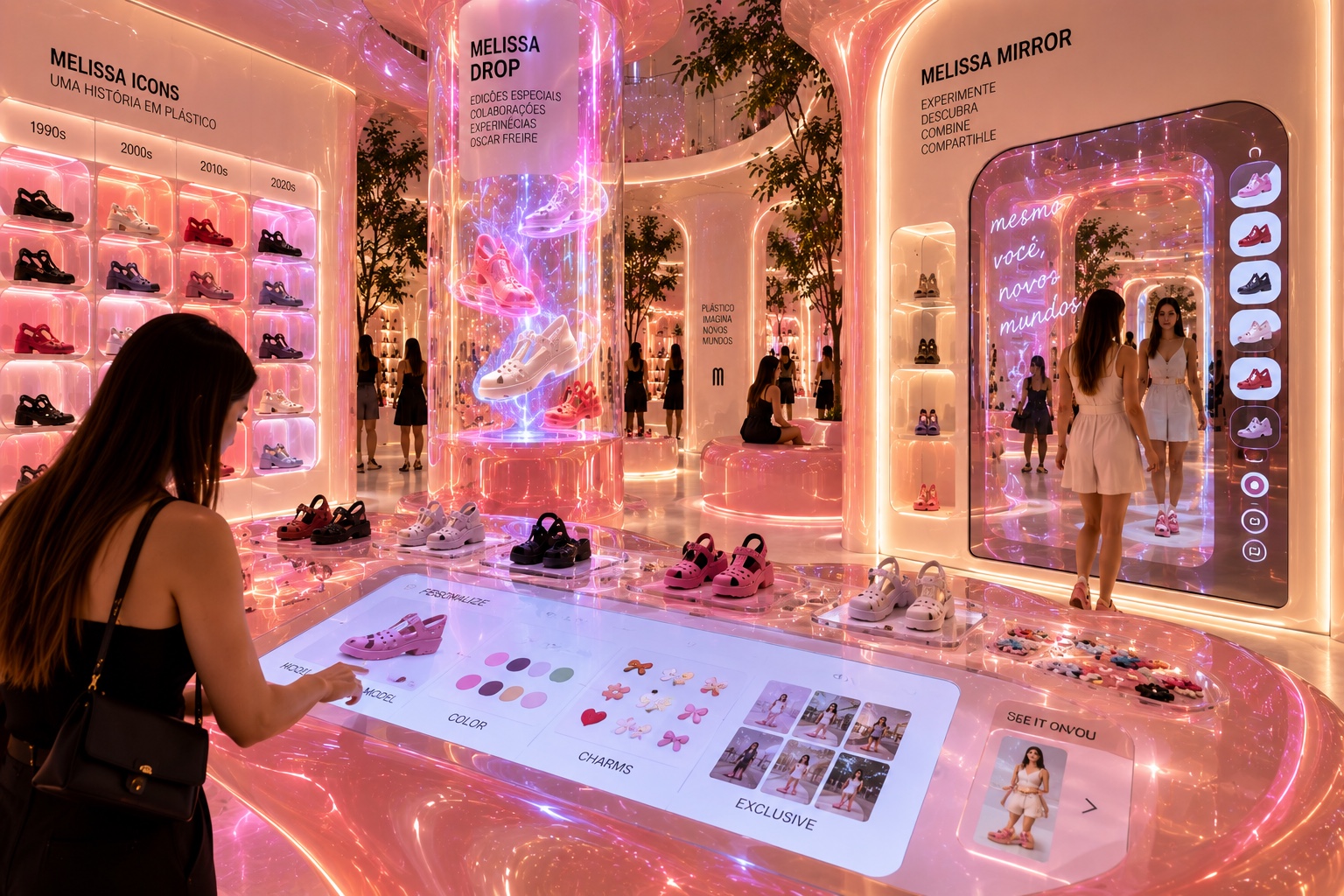
Melissa Lab. A long sculptural table where you choose a model, a colour, pins and charms on a touch surface, and see it on other people before you buy it.
Melissa Icons. A wall of the brand’s history by decade, shown as a lit archive of plastic.
Melissa Drop. A transparent tower for special editions and collaborations, rising through the centre of the store.
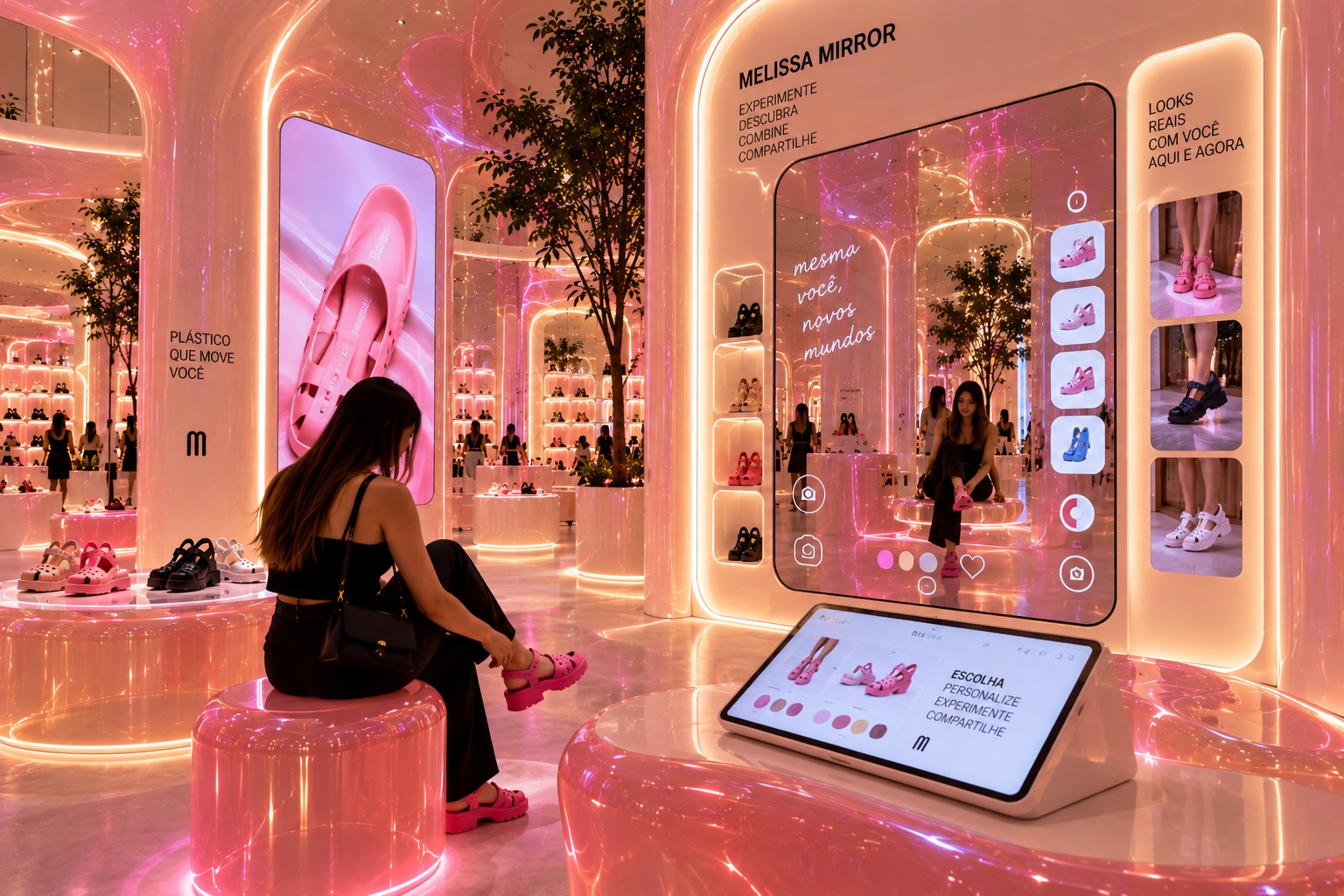
Melissa Mirror. A smart mirror where you try, combine and share, next to real looks from other customers. The line on the glass: mesma você, novos mundos, same you, new worlds.
Collabs. A room for artists and limited editions, built around one pink sculpture.
Fitting Room. Rounded booths and a wall of colour samples: more colours, more possibilities.
Lounge and Melissa Café. Places to stay without buying anything: soft seats, plants, a round counter under pink lamps. The store as somewhere to meet, not only to shop.
03. Plastic as Image, Plastic as Matter
The store has to be built, and priced, so nothing here is made of solid plastic. The organic shapes are glass-fibre (GFRP) or GRG modules on a light steel frame, finished in high-gloss automotive PU paint so they read as liquid. Benches, displays and product capsules are thermoformed acrylic, in a range from clear to frosted to milky to transparent pink. The facade is a second skin of moulded polycarbonate and glass. The floor is a continuous self-levelling resin with no joints, and RGBW LEDs let the whole interior change colour.
Next to these perfect surfaces there is a second kind of plastic: Melissa’s own production waste, shredded and pressed into panels for counter tops, benches, pedestals and parts of the customisation station. The fragments stay visible. On one side, plastic as image: glossy, flawless, artificial. On the other, plastic as matter: recycled, imperfect and honest about where it came from. The materials tell the story instead of decorating it.
Exposed metal is kept to a minimum. Too much stainless steel and it becomes a tech store. Melissa should stay soft, tactile and slightly unreal.
04. Where, when, with whom
Rua Oscar Freire, São Paulo. Study for the new Melissa flagship by ALGAZAL//CO, 2025. In pricing phase.